
By Rory Archer
TUCSON, ARIZ. — In the spring, I often sat on my back patio late at night, working on my astronomy project: tracking the movement of the sky across hours, days and weeks. For me, this meant going out around 2 a.m. and drawing a projection of the moon’s location throughout the week.
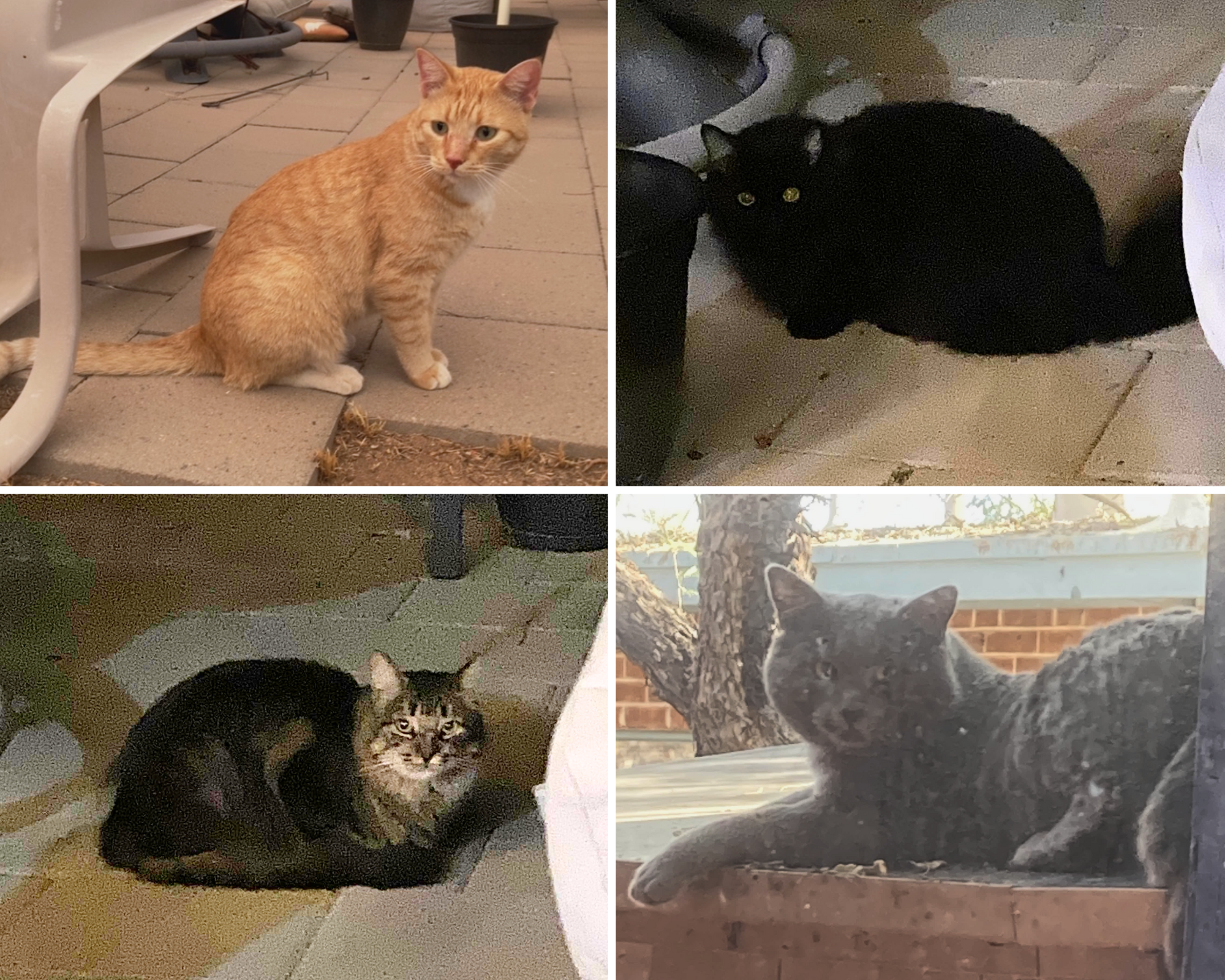
This task became much more enticing once I noticed a black cat that would often cross my yard at that hour, nearly every night. Even after I finished my project, I often asked my roommate to let me know if he was going outside to smoke, so I could go with him to leave cat food out.
It started out as an occasional sighting of a black cat, and slowly became a nightly appearance of different cats. In the summer, an orange cat would often curl up by my feet as I read, and in the fall, a fluffy tabby would often wait for me to come outside, sitting a few paces away as I tossed cat treats across the stone brick.
By this winter, we had four feral cats who frequented the yard, the last being a light gray cat who sat by my bedroom window and often started fights with the aforementioned orange cat. Despite each cat’s very different demeanor, I was happy to see them in my yard, and would worry when they were gone for long periods. And when I became more hesitant to walk outside in the dead of night to hang out with neighborhood cats because of the cold, I knew the cats weren’t as lucky as I was to have a warm place to sleep.

The four feral cats in my yard.
Compassion for animals aside, it is important to respect cats’ autonomy. Feral cats rarely trust humans or have any interest in living with them, and they survive just fine as strays—they can also carry parasites and diseases, and may attack if approached. Some cats seen in residential areas may still belong to someone, simply being outdoor cats with a home to return to. Here are some things to consider when you spot a feral cat.
Do not bring a street cat to the shelter unless you believe it’s lost or needs veterinary care.
There are hundreds, if not thousands, of feral cats in the city. Shelters are often already at capacity, and with the inability to turn animals away, unadoptable animals may be euthanized for space. Not to mention, trapping is incredibly stressful for cats, and if possible, should be minimized. Many shelters have what’s known as a Trap, Neuter, Release (TNR) program, meant to vaccinate animals, check them for illness and neuter them to prevent overpopulation. The Southern Arizona Humane Society has a webpage about TNR and who to contact to perform one; It’s important to schedule the procedure and pick up a proper TNR cage before attempting to trap a cat. Consider if the cat has somewhere warm and safe to return to before trying to trap them.
Cats who have already undergone TNR will have the tip of their left ear removed—you can see this on the feral tabby who’s often on my patio.

This cat’s left ear has a flat edge, instead of the usual point, because it has been tipped and neutered.
Check under and around your car before starting it in the mornings.
Cats often sleep under cars or on top of wheels for shelter and warmth, especially if the car was recently running. And while Tucson doesn’t get cold enough for ice-preventing chemicals, it is still important to be mindful of possible toxic substances in your yard, including antifreeze and weed killers.
Consider what food and water will be edible in the cold.
If you leave food and water out, don’t leave it in a metal container. If you’re concerned about water freezing, it may be good to invest in a water fountain, or leave microwavable heating pads with the food and water. According to Alley Cat Allies, canned and wet food takes less energy to break down, and as long as it doesn’t freeze, is perfect for cats in the winter.
Want to build a cat shelter?
Cat shelters should be small to help retain heat and keep out other animals, and can be made from something as small as a storage bin, and can include shredded newspaper and straw (not hay) as insulation. It’s also important to place these shelters in areas away from possible rain, snow or wind, and not in plain sight. There are plenty of tutorials online of how to make cat shelters, including another article from Alley Cat Allies.
This winter hasn’t reached freezing temperatures just yet, but temperatures below 45 degrees Fahrenheit can harm cats. While providing for feral cats is by no means a requirement, many people enjoy spending time with tame street cats, and may benefit from setting up cat shelters in their community. Providing shelter can help cats become more comfortable around humans, keep them from sleeping in dangerous areas and help control pests.