
By Quinn Smalley
Who really owns your games? Spoiler: It’s not you!
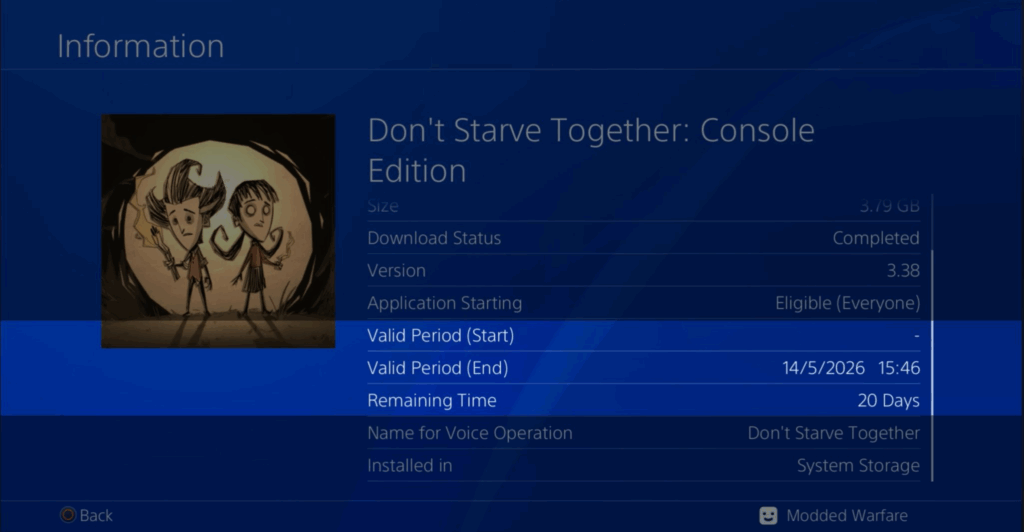
DRM notice on PlayStation Network. Screenshot by Quinn Smalley.
In another boldfaced demonstration of corporate overreach, Sony has applied digital rights management, or DRM, to all future purchases, meaning you will need to have an internet connection in order to play the games you purchased.
Every 30 days, if you do not log into the PlayStation Network, you will be stone-cold locked out of the game. DRM is in place mainly to stop unauthorized copying of the game to mitigate piracy, but it just makes Sony look hostile to consumers.
Users report that the license expiration date is masked in PS5 menus. Its presence has been confirmed via the removal of the PlayStation 5 CMOS battery and disconnecting the console from the internet.
Without the CMOS battery, the console cannot keep track of the date and time without the internet. Disconnecting from the internet in this state simulates exceeding the 30-day expiration date. This results in the game being immediately inaccessible, as YouTuber Spawnwave demonstrates in this video.
DRMis not new and is often a topic of discourse when it comes to PC releases of games, with the digital security company Denuvo at the crux of it.
DRM for console releases of games from their respective digital stores, PlayStation Network and Xbox Live, is not too common. In PlayStation’s case, it only had timed DRM for games that were given complimentary to PlayStation Network subscribers. These freebies came with a similar 30-day timer, becoming unusable if you were not connected to the network for 30 days.
This might not seem like a big deal. For what reason would any of us be disconnected from the internet for that long in this day and age? But to many, this means that we have much less control over the media we purchase.
We already know we do not own the game, movie or song — it is a license to use it. Will we eventually have to ask for permission to play the game we purchased every time we want to play it?
Maybe you are still thinking it is not a big deal, that you will buy the disc version of the game. I like where your head is going, except:
- It is not uncommon for games to not have a physical release at all.
- A new and growing practice is to load the disc with a game key that enables your console to download the full game as if it were a game patch, making it seem like the game is on the disc.
This is not just a Sony issue. Nintendo has also faced backlash over the introduction of game-key cards on the Switch 2. Game-key cards allow you to play the game, but the game is not actually on the card, again, just a key to download the full game onto your console.
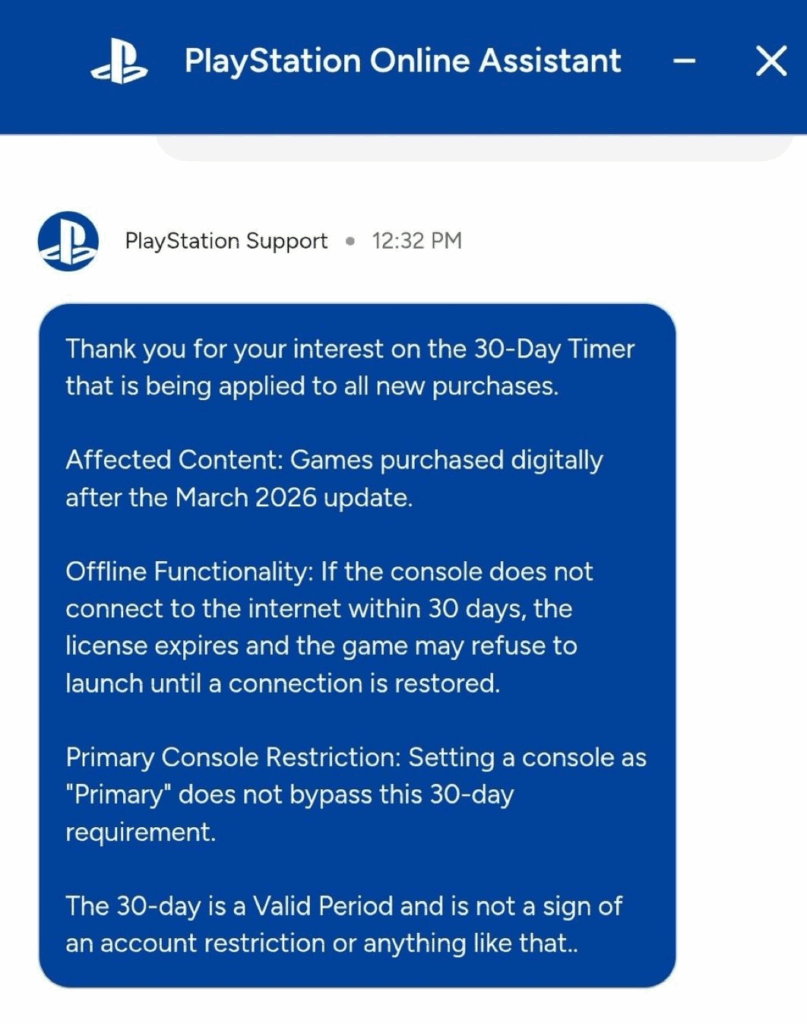
Conversation with PlayStation Support about the 30-Day Timer DRM. Screenshot by Quinn Smalley.
Sony broke their silence and responded to the DRM controversy in a statement to GameSpot: “Players can continue to access and play their purchased games as usual. A one-time online check is required to confirm the game’s license, after which no further check-ins are required.”
Fans have deduced that the DRM that is being loaded onto games is temporary, and only to last the duration of the refund period that Sony offers to new purchases, which is 14 days.
Logging in after the 14 period removes the timer completely and going forward, the game will not need to authenticate again. “Our best guess is that this might have something to do with a refund scam,” Doesitplay writer Clemens Istel comments to Kotaku.
Your access to the content you purchase is gatekept by large companies, and you are reliant on them for permission to play the game, along with an internet connection.