
By Quinn Smalley
Main character Hinako stumbles upon a small cluster of Hokura, or shrines.
“Even if… you’re gone… I’ll keep my promise, no matter what.”
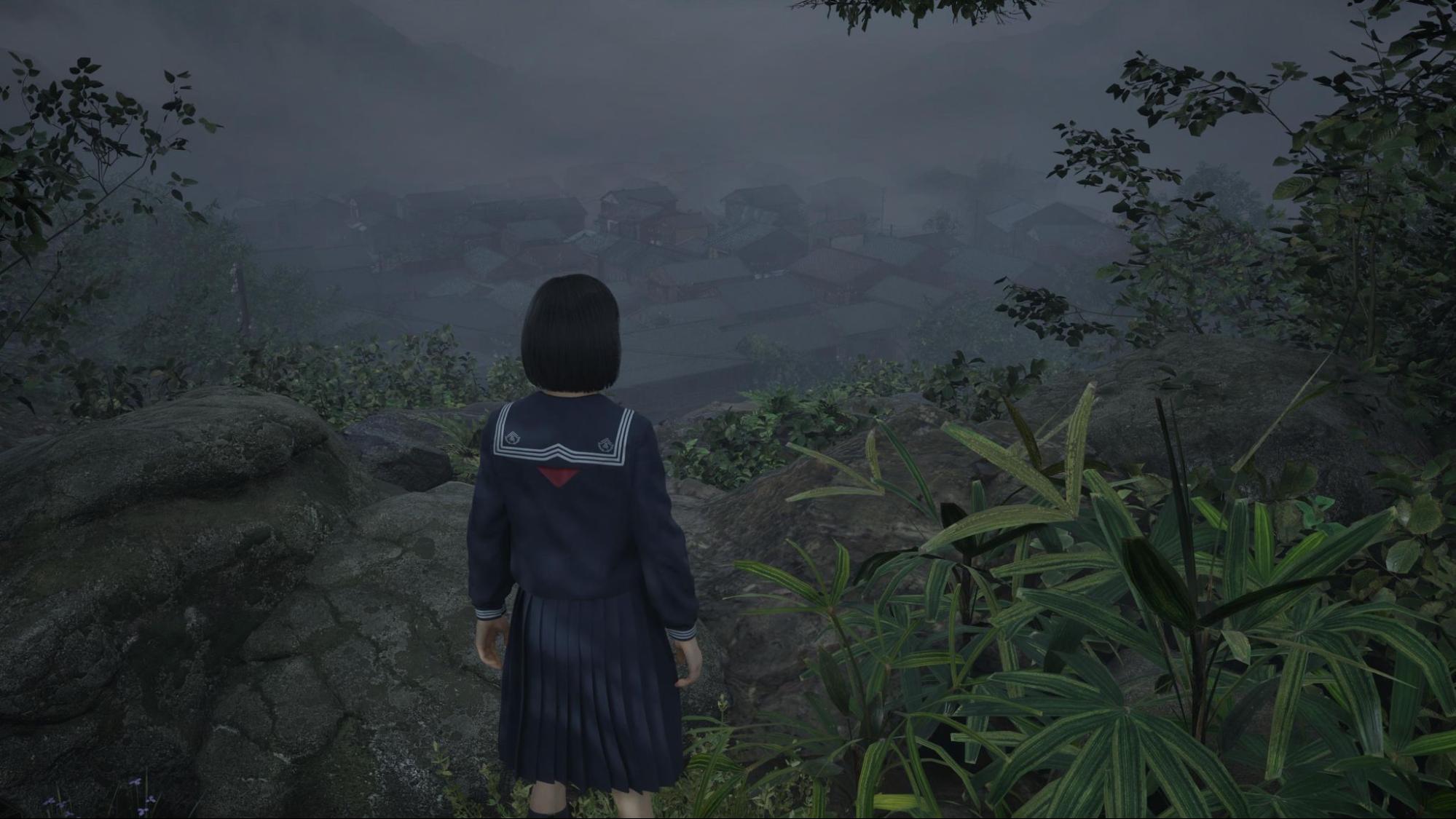
Overturned beer bottles, drunken belligerent yelling, a meek voice trying to smooth things over and the slamming of the front door welcomes you to the Shimizu residence. Emerging from the house that feels like a held breath, our protagonist, Hinako Shimizu, a teenager from the town of Ekisugaoka, leaves her home to meet up with her friends to find some comfort after an argument with her parents. Outside, is an ominous and otherworldly pea soup fog greeting Hinako and the player. Despite the eeriness, Hinako enters the fog, and “Silent Hill ƒ” begins.
The first thing that may stand out to players is the new setting: Ekisugaoka, in comparison to its predecessors that take place in present day in the cursed fictional town of Silent Hill, Maine. “Silent Hill ƒ” takes the series to rural Japan in the 1960s. This time is reflective of a time where Japan, especially rural Japan, was practically untouched by American ideals and inventions. For example, there’s an uncommon item called, “Chocolate.” Its in-game description says, “A new, imported candy that has been increasing in popularity. A rare treat for local children.”
You’re surrounded by classic Japanese cars, traditional all wood homes with sliding doors and beautiful shrines all lovingly detailed. Players will feel as though they are walking through a time capsule.
These detailed environments tell such vivid stories and give the player an idea of what life was like before the fog descended upon town. Environmental storytelling is crucial to the “Silent Hill” experience and things like fully and distinctly decorated rooms tell stories of the previous inhabitants. What they did and what their personalities were like, overturned tables, destroyed furnishings, blood trails, and bits of viscera left on the floor all work in harmony to the player, detailing the untold stories of the ill-fated residents of Ekisugaoka.
The beautiful yet stomach churning scenes of crimson spider lilies sprouting amongst mounds of discarded flesh and entrails within the foggy and verdant Japanese rural mountain town is nothing short of breathtaking. Personally, “Silent Hill ƒ” easily takes the cake as the “Silent Hill” title with the best art design in the entire series.
In other “Silent Hill” games, fans might remember the Otherworld segments of the game, where all the environments morph into a dark, rusty chain-link fence lined nightmare complete with black and bottomless pits, bloody floors, exceeding filth and you’re left with little more than your flashlight and an iron pipe to defend yourself. “Silent Hill ƒ” does away with most of that, and instead transports you to clean almost sterile, gritless, yet menacing otherworld locations filled with grotesque enemies waiting to cut (literally) your story short.
“Silent Hill ƒ ‘s” story is unique to the series for a few reasons. It doesn’t revolve around Silent Hill the location. It takes a Japanese teenager’s perspective (all other protagonists have been white), and more directly addresses social norms prescribed by society. Hinako’s story is sad, lonely, complicated and rooted in social issues that women face to this day. Themes of sexism, arranged marriage, gender roles, dominance versus submission and emotional suppression are all on display within the first five minutes of the game.
Most of the game’s story is told through files found within the environment. The fiercely scrawled messages on scraps of paper often soaked in blood expose the supporting characters’ true emotions and thoughts they wish they had the courage to say out loud. Reading these files is critical to understand the story in its entirety, so don’t miss them!
There have been big changes made to combat that shakes up the current “Silent Hill” formula. Due to this game taking place in 1960s Japan, there are no firearms, where in other games you got a full arsenal of melee and long-range weapons. Combat, while still clunky and imprecise at times, the new action-oriented combat system brings some much-needed improvements to the swing-until-its-dead gameplay loop that previous titles relied upon. Hinako proves to be much more deadly with her attacks than previous protagonists. She can unleash powerful counter attacks that require precise timing and careful memorization of the enemy’s movements, which is unfortunately this new system’s downfall.
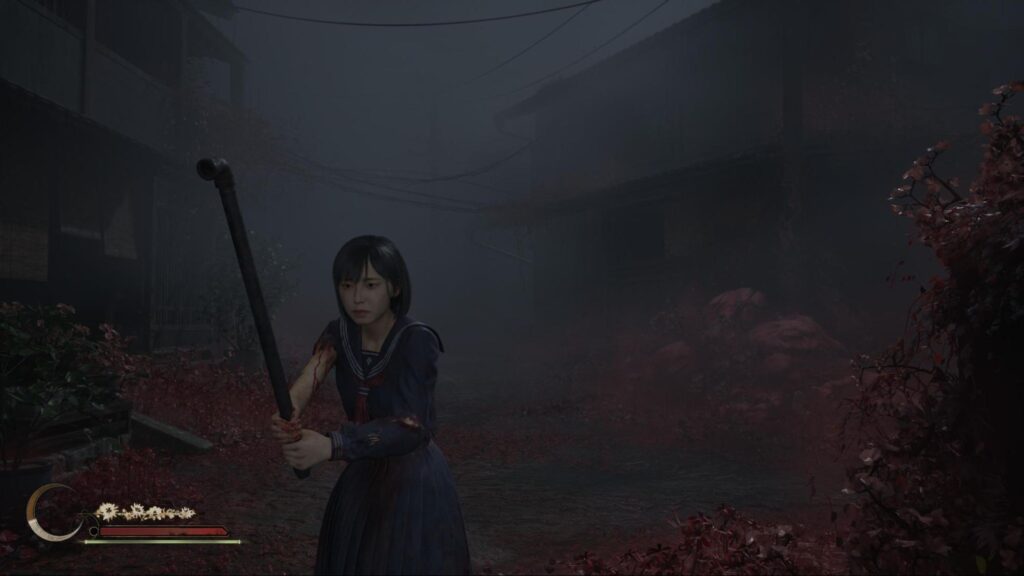
Nowhere is safe from the corruption. Ekisugaoka is being slowly overtaken.
Due to the nature of this more evolved combat system, combat can become tedious and formulaic. Once the player gets comfortable with the combat, dispatching enemies even on hard difficulty proves to be more of a chore than a thrill. To balance Hinako’s prowess, she has a stamina bar that you must be mindful of as it depletes quickly during combat. If it goes down to zero, Hinako will have to stop and take a breather leaving her open to the enemy’s attacks. An unwelcome new change is the forced combat sections.
Hinako being chased.
While you are able to run away most of the time, there are many moments when you are forced to fight waves of enemies. This change is distinctly not in the spirit of Silent Hill and takes away from the horror and converts it into unappealing brawler action.
Puzzles are back and just as tough as before. Relying upon the new setting and taking inspiration from the culture of Ekisugaoka and Japan in general, the developers have created some interesting puzzles. One early puzzle had me organizing traditional Japanese items in a specific order with very little information to go off of. In another instance, I found myself having to decode messages using an in-game cipher. None of the puzzles are groundbreaking but they are still good brain teasers that break up the action-oriented gameplay well.
“Silent Hill ƒ” is, in some ways, a departure from previous entries, but at the same time honors the core elements of what makes a decent “Silent Hill” game. While combat wasn’t my favorite, it is vast improvement from previous attempts. I don’t think there’s a soul out there that would say “Silent Hill” is known for its groundbreaking combat design, so fans should feel right at home. Second only to the art design and graphics, the storytelling is by far the best part of “Silent Hill ƒ.” The acting and writing made me empathize with Hinako, feeling her unease, anger and betrayal during so many cut scenes. It’s a game that makes you feel something, and that’s refreshing.
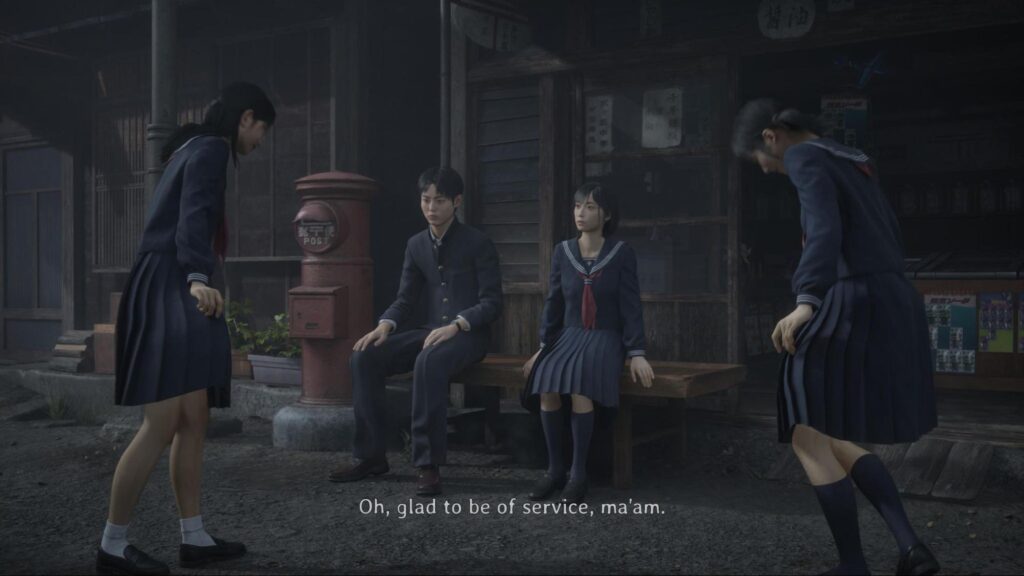
A moment of levity, Hinako with her friends.
It has been 13 years since the last mainline “Silent Hill” title was released with the last title being “Silent Hill: Downpour,” a game met with tepid reception at the time. For fans of the series such as myself, the wait was agonizing, but worth it.
This review is reflective of my experience playing “Silent Hill ƒ” with combat and puzzle difficulty modes set to “Hard.”