
By Quinn Smalley
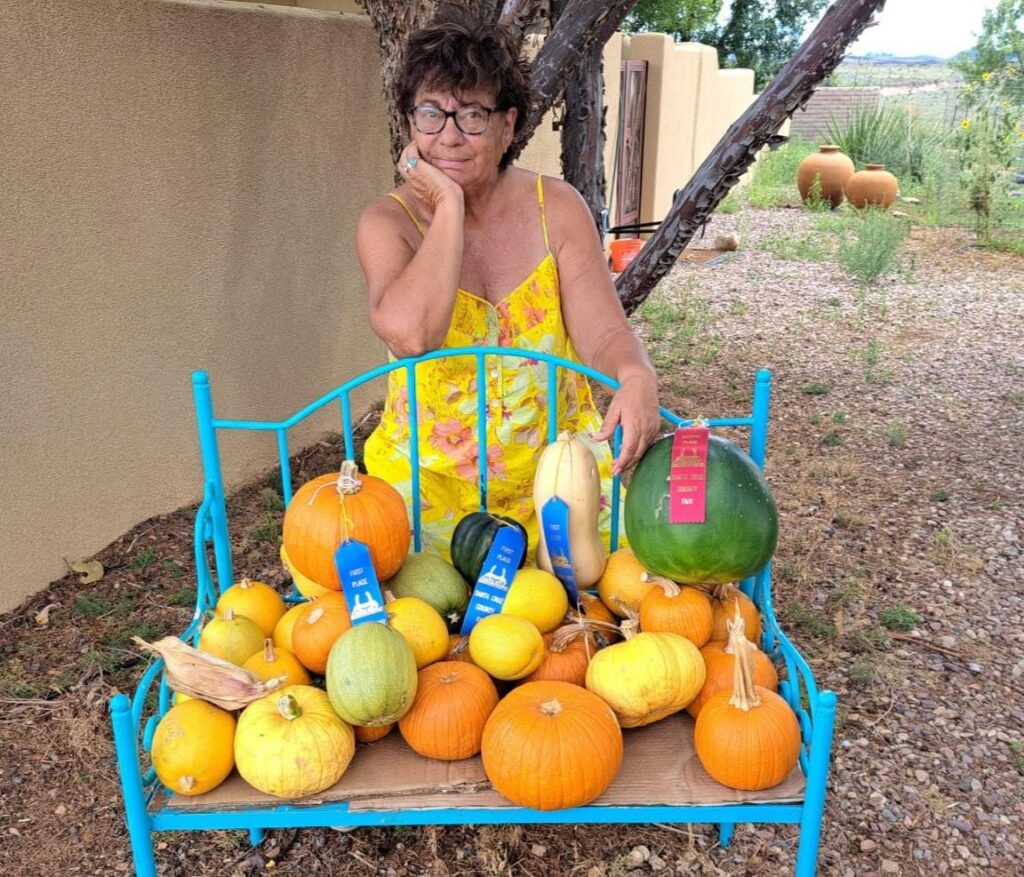
Holly Schaffer. Photo courtesy of PCPL.
We all know them, and they always seem to be flippantly used as a joke in our lives: “Go to the library and learn something,” “Go to the library and read a book.”
But when’s the last time you’ve been to the library? Admittedly, it’s been a very long time since I’ve set foot in one myself, which made me wonder, Where do libraries fit in our communities in 2026?
So, I spoke to Holly Schaffer, communications specialist for Pima County Public Library, who informed me that there’s way more the library offers than just borrowing books and accessing a computer.
“Our goal is to reach as many people in our community all the way [across] 9,200 square miles. We have 27 locations; currently, two of them are under renovation,” she said.
Schaffer went on to explain that some of the ways the library has been able to reach different parts of the community in more meaningful ways are through their “affinity teams.” These teams are focused on expanding library programming that highlights a multitude of diverse voices within the Tucson community. Hispanic, Black, Asian and Pacific Islander, immigrant, LGBTQIA+, and even agricultural communities are represented, with each group holding specific events, book clubs, meetups, seminars, author meet and greets and staff reading lists.
One affinity group in particular, “Synapse,” focuses on mental health. It structures its community engagement around mental health concepts, one of which is loneliness.
“Recent survey data from the American Psychological Association reveals that 54% of respondents regularly feel isolated, left out or lacking companionship. I mean, that’s … that’s huge,” Schaffer said
The numbers don’t stop there. In 2025, the American Psychological Association posted its annual “Stress in America” survey results, adding that out of those surveyed, 50% felt left out and 50% lacked companionship.
To address and raise awareness of the loneliness epidemic and the human need for connection, Synapse completed a project that commissioned local illustrator Audrey De La Cruz (@annotatedaudrey on Instagram) to create postcards featuring words of encouragement that will be sent to people and local community institutions.
To my surprise, the library also offers a seed library as part of its affinity groups, with the mission “to provide equitable access to seeds, knowledge and opportunities for our community to learn, engage and connect.” One of the major ways the seed library achieves this is through lending seeds from the community.
Here, you can “check out a seed” and plant it; when the plant successfully grows, you can “return” the seeds that the plant yields. All the seeds are “desert adapted,” which makes them tolerant to our harsh weather.
The seed library is one major way Pima County Public Library engages the community by providing free education about local flora. The effort is supported by classes like “Heat Proofing Your Garden” and “Growing Herbs in the Sonoran Desert,” which will be held at Martha Cooper Library on April 28, 2026.
Education is clearly at the forefront of most Pima County Public Library events, but what if you’re someone looking to get an education, not just supplement one? The library has an answer for that, too: Career Online High School.
“When you reach the age of 22, you are no longer eligible to get a high school diploma. So really your only option at that time is a GED,” Schaffer explains. It’s a way to earn a “legitimate diploma,” and students are also able to pick one of eight career paths, such as childcare, hospitality or a general career certificate, that elevates them to not just graduating high school, but going in a professional direction they want to pursue.
The program is provided at no cost to the student and is supported by the Pima Library Foundation, Friends of the Pima County Public Library, Friends of the Oro Valley Public Library, and Friends of the Green Valley and Sahuarita Libraries.
“Just this past couple months, we reached, you’re not gonna believe this, 200 graduates,” she said.
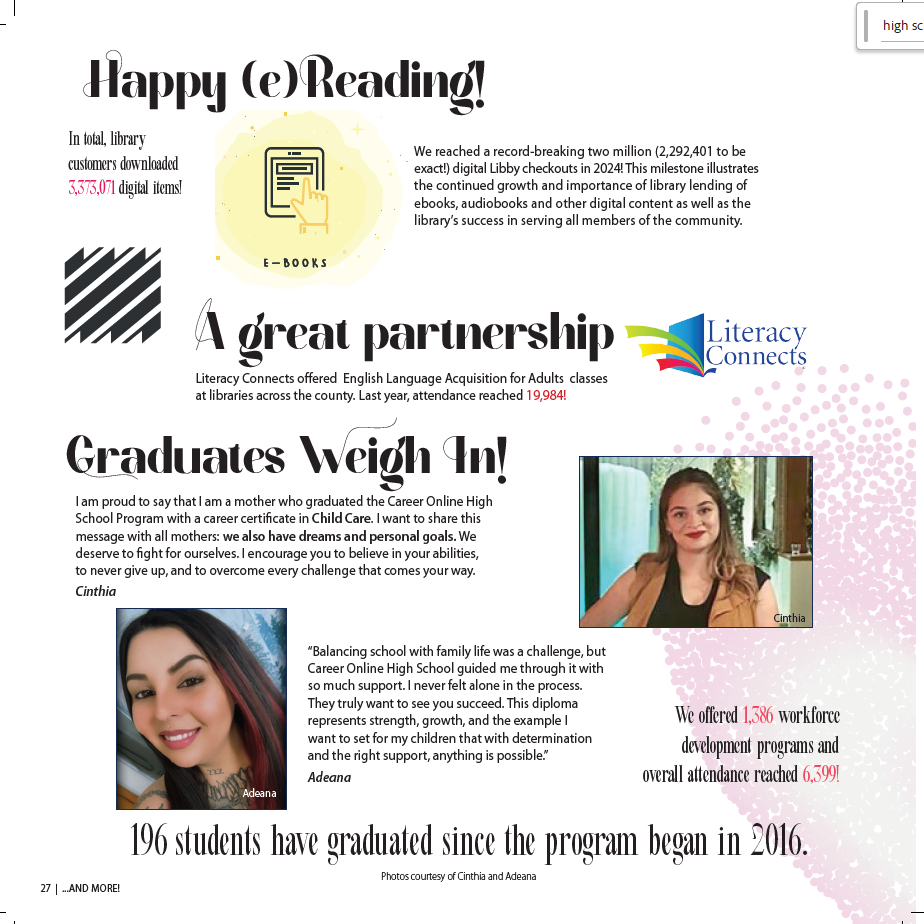
Photo courtesy of PCPL.
Beyond getting a high school diploma, PCPL offers English classes, pathways to citizenship classes, and partnerships with Literacy Connects, a local nonprofit whose goal is to spread literacy regardless of skill level or age. Schaffer has seen firsthand what their work with Literacy Connects has done for the community.
“I had the opportunity to interview a gentleman who wasn’t able to read until he was, I think, 60 years old and started getting help from Literacy Connects. He had kind of been passed around through the system and, you know, just did the best he could. And at some point, he told me, ‘I really thought I wasn’t ever gonna learn to read,’ and now he’s reading.”
All that access to community, and you don’t even need a library card for almost all of it. The services PCPL offers with a library card span from the classic offerings like checking out a book or CD and access to study rooms, free WiFi, research resources and printing, to deeper cuts like streaming services and ebook borrowing.
In particular, I was surprised to learn about Kanopy, a video streaming service that has fairly current offerings like “Together,” starring Dave Franco and Alison Brie, which came out last year, along with an abundance of documentaries. Kanopy is already available to Pima Community College students, as enrollment makes you a member of the Pima Community College Library.
A couple of days after my chat with Schaffer, I finally decided to break out of the comfort of my bed and iPhone screen, walked over to Martha Cooper Library and got my card. When I finally held it, I realized I didn’t just gain the ability to check out books, or even seeds, I joined a community.
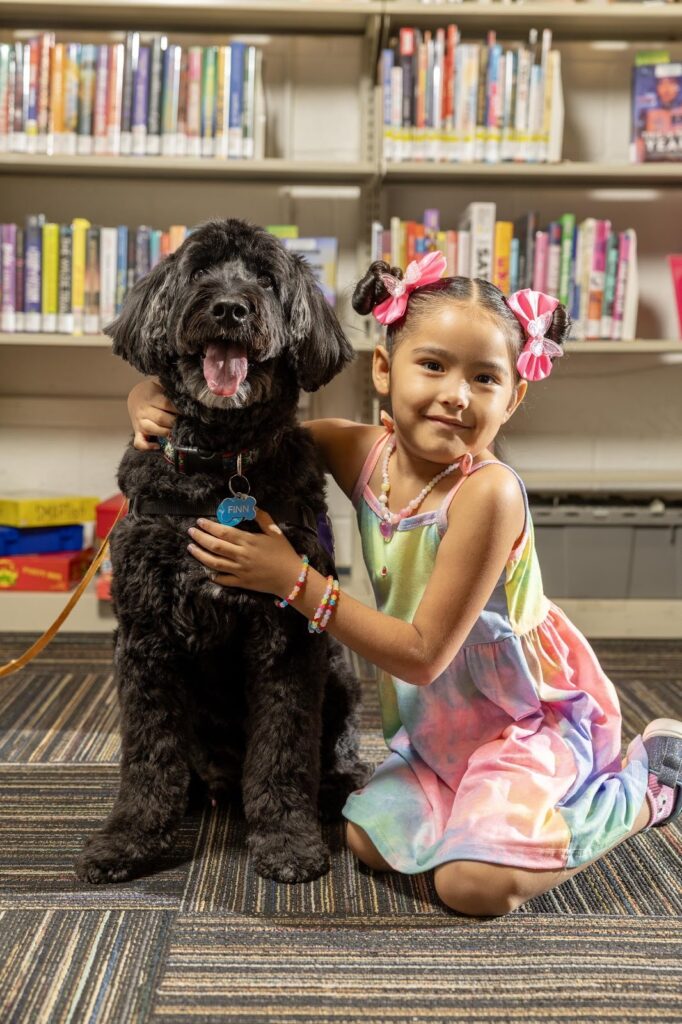
Photo courtesy of PCPL.
For more information, explore these links and services below:
Synapse (postcard project)
E-Library by subject / interest area
Culture Passes