
By Quinn Smalley
Amid the chaos of the American political system, there was a brief break in the conflict. For one night, most of America united to watch Benito Antonio Martínez Ocasio, a.k.a. Bad Bunny, and his eagerly anticipated halftime performance at the Superbowl LX on Feb. 8, 2026.
Bad Bunny’s performance was historic, being the first time a performer completed a set on one of the world’s biggest stages entirely in Spanish. It also served as meaningful representation for Puerto Ricans and the Latin American community as a whole. And like most halftime shows, Bad Bunny’s performance was rife with symbolism and political statements meant to be thought-provoking, honest, moving and, most of all, unifying.
The halftime performance began with a prerecorded film transporting viewers to an aerial shot rushing over a sugarcane field (think the opening scene of “Wicked” or “The Wizard of Oz”). We were welcomed by a young man in a pava, the straw hat jíbaros wear in the fields, proudly proclaiming, “Qué rico es ser latino. Hoy se bebe!” or, “How great it is to be latino. Tonight we drink!”

Bad Bunny gave us more than just Latin pride on Feb 8! Gif created by Quinn Smalley.
After, the scene transitions back to Levi’s Stadium for our first glimpse of Bad Bunny. He faced away from the camera, sporting a custom football jersey designed by Zara with the name “Ocasio” and the number 64 on the back. The costume was made of raw cotton and fashioned to resemble a traditional jíbaro garment worn while working in sugarcane fields.
A notable detail was his belt, fashioned from rope, another nod to the practical, hardworking nature of the jíbaro. The set, the dancers and the garments along with their materials made strong statements about Puerto Rico’s colonization. During the slave trade, Puerto Rico exported cotton and sugarcane.
Opening with the song “Tití Me Preguntó,” Bad Bunny walked down a row of sugarcane, passing small set pieces: elderly men playing dominoes, a piragua (shaved ice) stand and a nail salon, all symbols of the Puerto Rican experience on the island, especially dominoes. Before long, he stood atop a casita, another important piece of Puerto Rican iconography, performing “Safaera” and “Party” before plunging through the roof of the structure.
He burst out onto a crowded porch filled with influential Latin Americans, including Cardi B, Jessica Alba, Pedro Pascal and Young Miko. As Bad Bunny made his way to the field and the growing block party it had become, he stepped onto the roof of a pickup truck and “EoO” began.
Billboards surrounding the stadium flashed the word “Perreo,” commanding everyone to drop low. Perreo is a style of dance similar to grinding and is closely associated with reggaeton, a Puerto Rican genre of music.
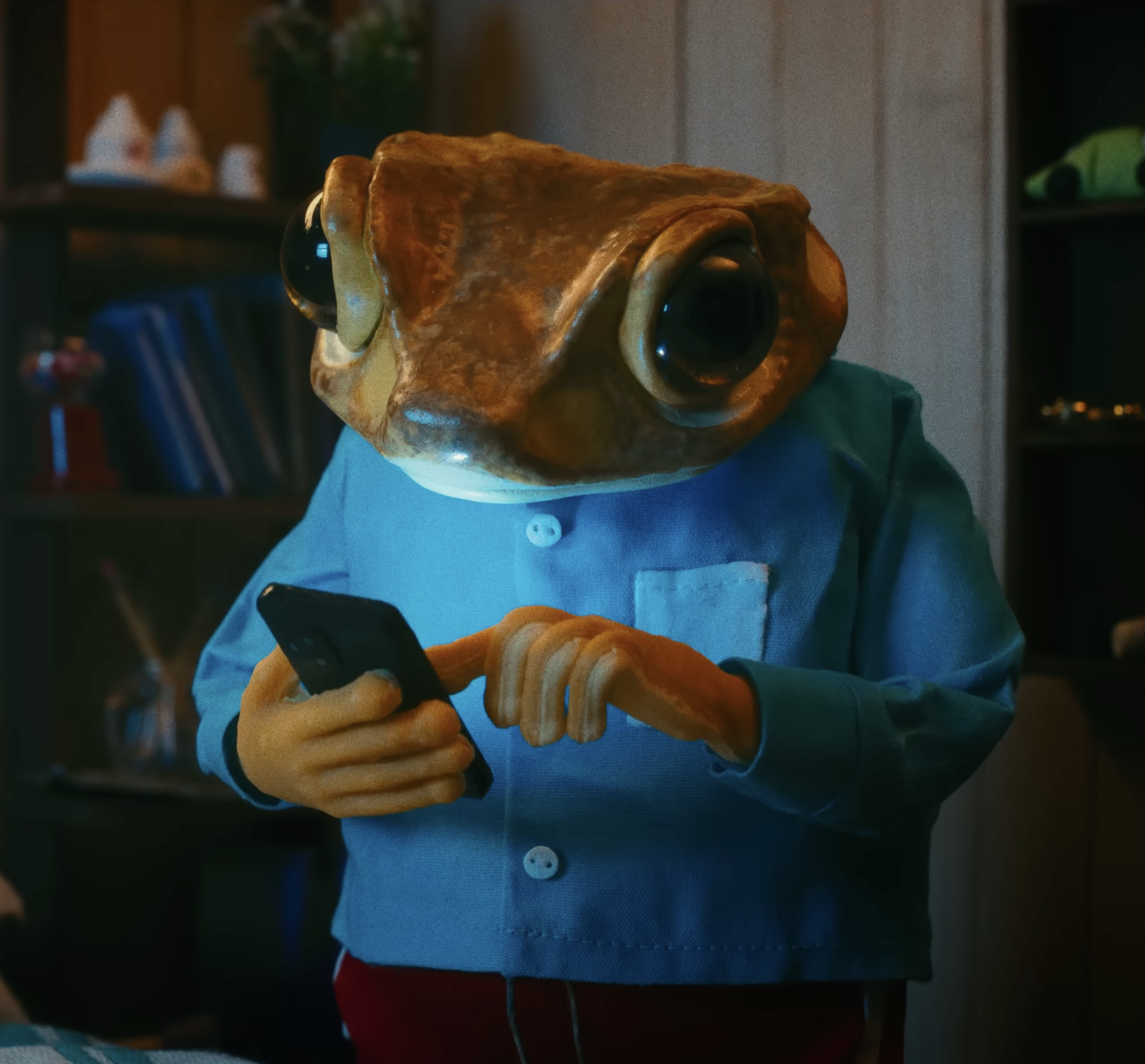
When “Monaco” started, viewers caught a glimpse of Concho, the Puerto Rican crested toad, the island’s only native toad species. It is listed as threatened due to habitat loss caused by development and other human activity. Unfortunately, the toad does not receive as much attention as the island’s iconic coquí frog, but conservationists hope the toad’s inclusion as a mascot during the current album era, “Debí Tirar Más Fotos,” will bring increased awareness and funding for the species.

Concho in the “KETU TeCRÉ” music video.
At the end of “Monaco,” Bad Bunny delivered a speech urging viewers to believe in themselves. He admitted he never expected to perform at the Super Bowl. As the camera panned away, a new structure emerged: a wedding bathed in sunset light. After the couple exchanged vows, the crowd parted to reveal Lady Gaga.
She performed a romantic salsa rendition of “Die With a Smile,” accompanied by Los Pleneros de la Cresta, a plena band from Puerto Rico. It is well documented that Bad Bunny is a huge Lady Gaga fan. Her inclusion made even more sense after photos surfaced of him wearing her tour merchandise, her introduction of him on “Saturday Night Live,” and their interactions at the 2026 Grammy Awards the week before.
Gaga’s costume was also notable; designed by Luar, a brand founded by Dominican designer, Raúl López. Gaga wore the Puerto Rican flag’s original sky-blue variant, the shade first used for the blue triangle. Her brooch was shaped like Puerto Rico’s official flower, the flor de maga (unfortunate name).

Lady Gaga joins Bad Bunny on stage at the halftime show. Photo by Christopher Polk.
The reception began as Gaga finished “Die With a Smile,” and Bad Bunny rejoined her onstage as “BAILE INoLVIDABLE” began. Gaga disappeared into the dancing crowd, and viewers were treated to a sweeping one-shot of Bad Bunny walking through the reception before launching himself off a balcony into the arms of his dancers perfectly recreating a moment from the “NUEVAYoL” music video.
The camera then panned to Ricky Martin, who delivered a powerful arrangement of “LO QUE LE PASÓ A HAWAii.” The song addresses the gentrification of Puerto Rico and fears surrounding potential statehood, warning listeners not to let what happened to Hawaii happen to Puerto Rico. It is a poignant and timely topic.

A photo of Ricky Martin from Getty images. By Kevin Mazur for Roc Nation.
Because Puerto Rico is not a state, and due in part to Act 60, which eliminates capital gains taxes to attract outside investors, the island has become a haven for cryptocurrency investors. The policy has widened the wealth gap and accelerated gentrification, pricing out native residents in ways similar to Hawaii.
Back at center field, three sparking, haphazardly placed high-voltage poles stood with dancers performing acrobatics from them. Without a harness, Bad Bunny climbed the poles while singing “El Apagón,” followed by “Café con Ron.” The imagery referenced the instability of Puerto Rico’s power grid, overseen by LUMA Energy, a Canadian company. Since Hurricane Maria, the grid has not been fully repaired, and residents still face frequent outages, sometimes multiple times a week. The translation of “El Apagón” says it plainly: “The Blackout.”
To close the iconic halftime show, Bad Bunny walked toward the end zone and asked God to bless America. He then named countries from North, Central and South America. As he listed them, dancers carried their flags toward the end zone while stadium billboards displayed the message: “The only thing stronger than hate is love.”
It echoed the message he shared when accepting the Grammy Award for album of the year.
Beyond the symbolism and theatrics, love was the night’s central message, and certainly not the Patriots’ embarrassing loss!

The Puerto Rican flag in its current state, after being changed from a light blue color in 1895 then from a darker blue in 1952.